

Budgeting: A Complete Guide to Creating and Managing a Budget
Introduction to Budgeting
Budgeting is one of the most important parts of personal finance. It helps you understand how much money you receive, how much you spend, and how much you can save for future goals. A well-planned budget can make everyday financial decisions easier and help you avoid spending more than you can comfortably afford.
Budgeting is not simply about cutting expenses or avoiding things you enjoy. Instead, it is a way to give your money a clear purpose. By creating a realistic plan, you can prioritize essential expenses, control unnecessary spending, save for important goals, and prepare for unexpected costs.
Whether you are managing your finances for the first time or trying to improve an existing system, learning the basics of budgeting can help you develop more organized financial habits.
What Is Budgeting?
Budgeting is the process of creating a plan for how you will use your income over a specific period, usually a week or month. A budget typically includes income, essential expenses, optional spending, savings, and debt payments.
For example, you might receive a monthly income and divide it among housing, food, transportation, utilities, savings, debt payments, and personal spending.
The exact amounts will be different for everyone. A budget should reflect your actual income, responsibilities, financial goals, and cost of living rather than following a formula simply because it is popular.
Why Is Budgeting Important?
Budgeting provides a clearer picture of your financial situation. Without a budget, it can be difficult to understand where your money goes each month.
A good budget can help you:
- Track your income and expenses
- Reduce unnecessary spending
- Build savings
- Prepare for unexpected expenses
- Manage debt
- Plan for large purchases
- Work toward financial goals
- Make more informed spending decisions
Budgeting can also reduce financial uncertainty because you know what expenses are coming and how much money you have available for different purposes.
Start by Calculating Your Income
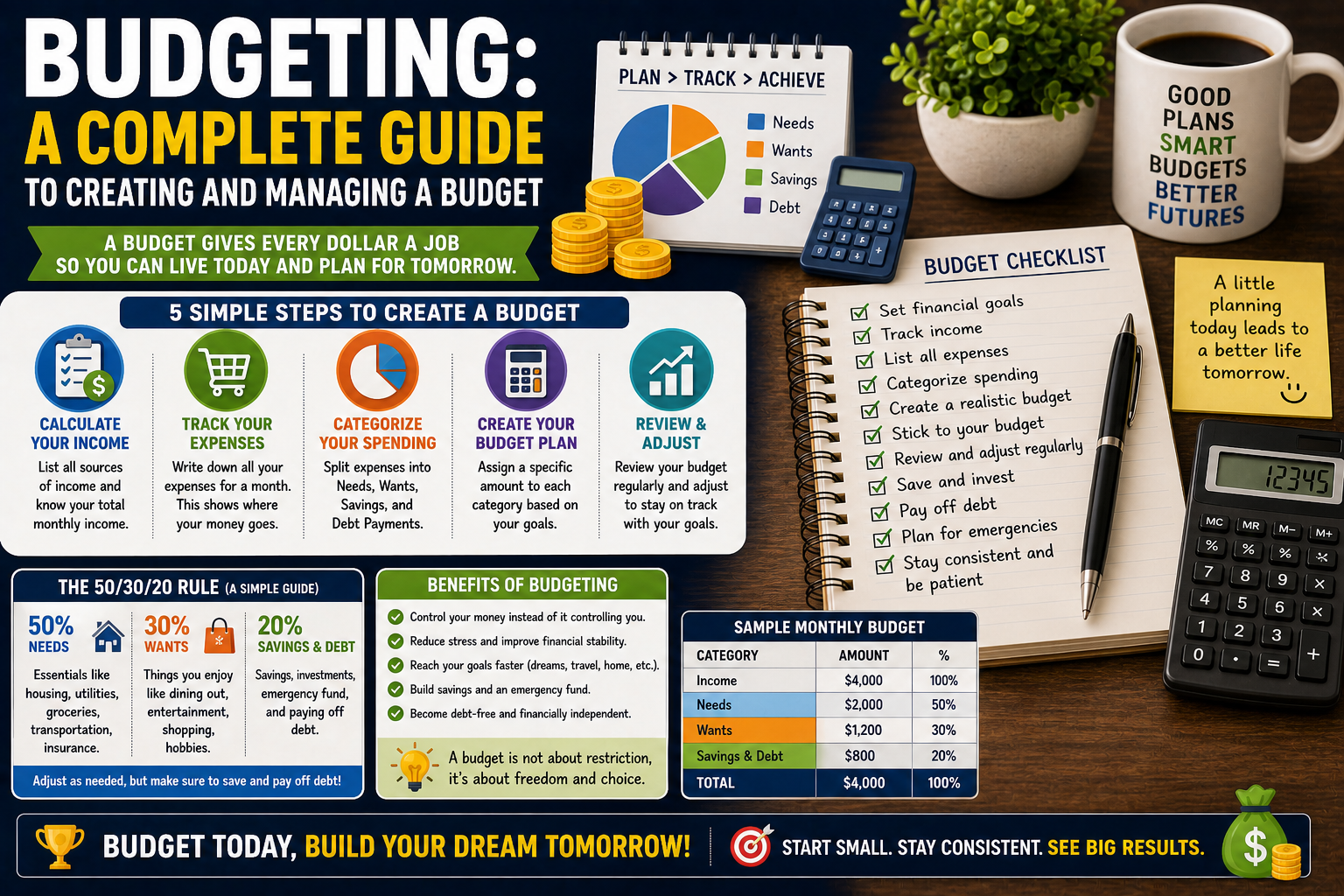
The first step in creating a budget is understanding your income. List all reliable sources of money you expect to receive during the budgeting period.
If you have a regular salary, this may be relatively simple. If your income changes from month to month, you may need to work with a conservative estimate based on your recent income history.
When calculating available income, consider the amount you actually have available after required deductions or other obligations.
Do not rely heavily on uncertain income when planning essential expenses. A realistic income estimate can make your budget more reliable.
List Your Essential Expenses
After calculating income, list your essential expenses. These are costs that are necessary for your basic needs and financial responsibilities.
Common examples include:
- Housing
- Food
- Utilities
- Transportation
- Education
- Insurance
- Required debt payments
- Essential household expenses
Some expenses remain relatively stable, while others can change each month. Estimate variable expenses carefully using previous spending where possible.
This step helps you understand how much of your income is already committed before you consider optional spending and savings.
Track Your Spending
Expense tracking is an important part of successful budgeting. Even if you create a detailed budget, you will not know whether it is working unless you compare your plan with your actual spending.
Record your purchases throughout the month. You can use a spreadsheet, notebook, mobile app, or another method that is convenient for you.
At the end of the month, compare your actual expenses with the amounts you planned.
If you consistently spend more than expected in one category, investigate why. The solution may be adjusting your spending, changing the budget amount, or finding a more practical alternative.
Separate Needs and Wants
Understanding needs and wants can make budgeting easier.
Needs generally include essential expenses such as food, housing, utilities, transportation, and required payments. Wants are optional purchases that provide convenience, entertainment, or enjoyment.
This distinction does not mean that wants should never be included in a budget. Entertainment and personal spending can be reasonable parts of a balanced financial plan.
The important point is to make sure optional spending does not interfere with essential expenses, savings, or financial obligations.
Choose a Budgeting Method
There are several ways to organize a budget. One popular approach is the 50/30/20 framework, which divides income into needs, wants, and savings or debt repayment. However, this is only a general framework and may not fit every person’s financial situation.
Another approach is zero-based budgeting, where every unit of income is assigned a specific purpose.
You can also use a simple spending-limit system that sets maximum amounts for different categories.
The best budgeting method is one that you can understand, maintain, and adjust when circumstances change.
Create a Realistic Monthly Budget
Once you know your income and expenses, create your monthly budget.
Start with essential expenses and required payments. Then allocate money toward savings and financial goals. Finally, set reasonable limits for optional spending.
Avoid creating a budget that leaves no room for normal life. If your plan is too restrictive, it may become difficult to maintain.
A realistic budget should provide structure while allowing some flexibility for changing expenses.
Build Savings Into Your Budget
Savings should be treated as part of your financial plan rather than something you only do with money left over.
Choose a savings amount that fits your circumstances. Even a small regular contribution can help develop the habit of saving.
You may have several savings goals, such as:
- Emergency fund
- Education
- Major purchases
- Travel
- Family expenses
- Long-term financial goals
Giving each goal a specific purpose can make saving easier to organize.
Create an Emergency Fund
An emergency fund is money reserved for unexpected and necessary expenses. It can be useful when facing an urgent repair, unexpected bill, or temporary income disruption.
Start with a manageable target and increase it gradually. Depending on your circumstances, you may eventually want enough savings to cover several months of essential expenses.
Keep emergency savings separate from everyday spending when practical. The money should remain accessible enough to use when a genuine emergency occurs.
If you need to use the fund, include rebuilding it as a future financial priority.
Include Debt Payments
Debt payments should have a clear place in your budget. List each debt, its minimum payment, due date, and interest rate if applicable.
Make required payments on time and consider whether your budget allows you to pay more than the minimum.
Two common repayment strategies are the debt avalanche and debt snowball methods. The avalanche approach generally prioritizes higher-interest debt, while the snowball approach focuses on smaller balances first.
Choose an approach that fits your financial circumstances and helps you maintain consistent payments.
Reduce Unnecessary Expenses
Budgeting can reveal expenses that are consuming money without providing much value.
Review subscriptions, frequent takeout, impulse purchases, unused memberships, and other optional expenses. You do not need to eliminate everything. Instead, identify areas where a modest reduction would free up money for more important goals.
For example, cancelling a service you rarely use could redirect that money toward savings or debt repayment.
Small recurring savings can become more meaningful when maintained over a long period.
Plan for Irregular Expenses
Not every expense occurs every month. Annual fees, school expenses, repairs, gifts, maintenance, and other occasional costs can create problems if they are not included in your financial plan.
Make a list of predictable irregular expenses and estimate how much you may need throughout the year. You can then set aside a small amount regularly.
This approach can reduce the chance that a large predictable expense will completely disrupt your monthly budget.
Use a Budget for Large Purchases
Large purchases should ideally be planned rather than made impulsively.
Before purchasing an expensive item, determine its total cost and consider whether it fits your financial priorities.
If the purchase is not urgent, you may be able to create a separate savings goal and contribute toward it over several months.
Comparing prices, researching alternatives, and waiting before making a major purchase can also help you make a more informed decision.
Avoid Lifestyle Inflation
Lifestyle inflation happens when spending increases as income increases.
For example, someone may receive a higher income and immediately increase spending on housing, entertainment, transportation, or other areas.
Increasing your quality of life can be reasonable, but consider directing part of any additional income toward savings, debt reduction, or long-term goals.
This can help ensure that higher income contributes to greater financial flexibility instead of simply creating higher expenses.
Review Your Budget Every Month
A budget should evolve as your financial circumstances change.
At the end of each month, review your income, expenses, savings, and debt payments. Identify categories where you spent more or less than planned.
Ask yourself:
- Did I stay within my main spending limits?
- Did I save the amount I planned?
- Were there unexpected expenses?
- Which expenses can be reduced?
- Do my financial goals need adjustment?
Regular reviews allow you to improve your budget rather than treating one plan as permanent.
Use Technology to Make Budgeting Easier
Technology can simplify budgeting. Spreadsheets, budgeting applications, banking tools, and digital reminders can help you track spending and monitor financial goals.
However, you do not need a specialized application to create an effective budget. A simple spreadsheet or written list can work just as well if you update it regularly.
Choose a system that is easy for you to understand and use consistently.
Common Budgeting Mistakes
One common mistake is creating a budget based on unrealistic assumptions. If your estimates do not match your actual spending, the plan may quickly become difficult to follow.
Another mistake is forgetting irregular expenses. Annual or occasional costs can cause unexpected pressure if they are not considered.
Some people also focus too heavily on cutting expenses while ignoring income, debt, or savings goals.
Finally, abandoning the budget after one difficult month can prevent improvement. Financial circumstances can change, and a good budget should be adjusted rather than discarded.
How to Make Budgeting a Long-Term Habit
Successful budgeting depends on consistency. Instead of trying to change every financial habit at once, start with a few manageable steps.
Track your expenses, review your budget regularly, save a realistic amount, and gradually improve areas where you are spending more than planned.
You can also schedule a monthly money review so budgeting becomes part of your normal routine.
Over time, these small actions can help you become more aware of your financial decisions and better prepared for future expenses.
Conclusion
Budgeting is a practical tool for managing money and working toward financial goals. By understanding your income, tracking expenses, separating needs from wants, building savings, managing debt, and planning for irregular costs, you can create a more organized financial system.
There is no perfect budget that works for everyone. Your budget should reflect your personal circumstances and change when your income, expenses, or priorities change.
The most important step is to begin. Create a simple budget, track your spending, review your results, and make gradual improvements. With consistency and realistic planning, budgeting can become a valuable part of your overall money management strategy.