

Personal Loans: How They Work, Types, Benefits & Tips
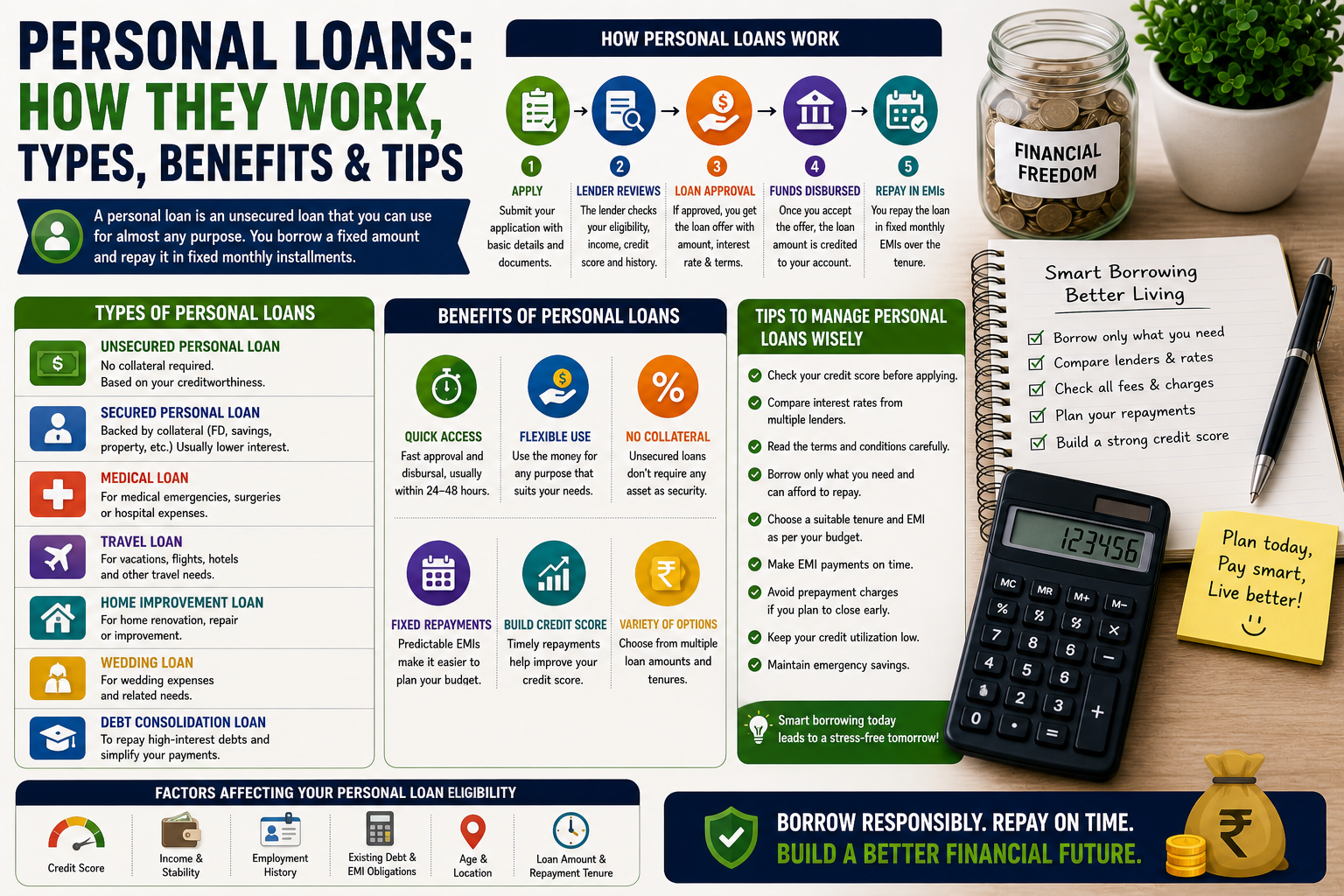
Personal loans are a common form of borrowing that can help people manage planned expenses, unexpected costs, or other financial needs. Unlike some loans designed specifically for a home or vehicle, a personal loan can often be used for a wider range of purposes, depending on the lender and the loan agreement. Understanding how personal loans work, what they cost, and what to consider before applying can help you make more informed financial decisions.
What Is a Personal Loan?
A personal loan is money borrowed from a bank, credit union, online lender, or other financial institution that is generally repaid over an agreed period through regular payments.
The borrower typically receives a specific amount upfront and agrees to repay the principal plus interest and applicable fees. Loan terms, interest rates, eligibility requirements, and repayment schedules vary between lenders and countries.
Some personal loans are unsecured, meaning they do not require a specific asset as collateral. Other loans may be secured by an asset, depending on the lender and product.
How Do Personal Loans Work?
The process usually begins when a borrower submits an application to a lender. The lender may review information such as income, employment, existing debts, credit history, and other eligibility factors.
If the application is approved, the lender provides the agreed amount according to the loan terms. The borrower then makes scheduled payments until the loan is fully repaid.
The total cost of borrowing can depend on the interest rate, loan amount, repayment period, fees, and other terms. Reading the loan agreement carefully before accepting an offer is therefore important.
Types of Personal Loans
Personal loans can differ significantly depending on how they are structured and what they are intended for.
Unsecured Personal Loans
An unsecured personal loan does not normally require the borrower to pledge a specific asset as collateral. Instead, the lender evaluates the borrower’s financial information and creditworthiness.
Because the lender may take on more risk without collateral, interest rates and eligibility requirements can differ from secured borrowing.
Secured Personal Loans
A secured loan is backed by an asset that serves as collateral. If the borrower fails to meet the agreement, the lender may have rights related to that collateral, subject to local laws and the loan contract.
Secured borrowing can have different pricing and eligibility requirements from unsecured loans.
Fixed-Rate Personal Loans
With a fixed-rate loan, the interest rate remains unchanged for the agreed period. This can make scheduled payments easier to understand and budget for.
However, the exact repayment structure depends on the lender and contract.
Variable-Rate Loans
A variable-rate loan can have an interest rate that changes according to the terms of the agreement. Changes in the rate can affect the amount of interest paid over time.
Borrowers should understand how and when the rate can change before accepting this type of loan.
What Can Personal Loans Be Used For?
Depending on the lender, personal loans may be used for various legitimate expenses. These can include home improvements, major purchases, education-related costs, moving expenses, unexpected bills, or consolidating certain debts.
However, the fact that a lender allows a particular use does not automatically mean borrowing for that purpose is financially beneficial. Before taking a loan, consider whether the expense is necessary and whether the repayment fits comfortably within your budget.
Interest Rates and Loan Costs
The interest rate is one of the most important factors to consider when comparing personal loans. It determines how much interest you may pay in addition to the amount borrowed.
Lenders may also charge other costs, such as application fees, origination fees, late-payment charges, or early-repayment fees, depending on the product and local regulations.
Instead of looking only at the advertised interest rate, review the total cost of the loan and all applicable charges.
Loan Term and Monthly Payments
The loan term is the amount of time you have to repay the loan. A shorter repayment period can result in higher regular payments but may reduce the total interest paid.
A longer term can reduce the size of each scheduled payment, but you may pay more interest over the full life of the loan.
For this reason, choosing a repayment period should involve more than simply selecting the smallest monthly payment. Consider the overall cost and whether the payment fits comfortably into your regular budget.
Personal Loan Eligibility
Lenders use different criteria when deciding whether an applicant qualifies for a personal loan. Common considerations can include income, employment, credit history, existing debt obligations, and the requested loan amount.
Some lenders may have minimum income requirements or specific credit criteria. Others may focus on additional financial information.
Meeting a lender’s basic requirements does not guarantee approval, and approval conditions can vary from one lender to another.
Credit Score and Personal Loans
Your credit history can play an important role in the personal loan application process. Lenders may use credit information to assess how you have managed borrowing in the past.
A stronger credit profile may help an applicant qualify for certain loan products or terms, while a weaker credit history can affect eligibility or borrowing costs.
Before applying, it can be useful to review your credit information and make sure the details are accurate.
Benefits of Personal Loans
Personal loans can offer several potential advantages when used responsibly.
One advantage is predictable repayment. Many personal loans provide a defined amount and repayment schedule, making it easier to plan for regular payments.
Another potential benefit is flexibility. Unlike loans designed for one specific purchase, some personal loans can be used for several different purposes.
Personal loans can also provide access to funds without requiring the borrower to use a specific asset as collateral when an unsecured option is available.
Potential Disadvantages
Borrowing money also creates financial obligations. A personal loan means committing to regular payments for the agreed repayment period.
Interest and fees can increase the total amount repaid, and missed payments may result in additional charges or negatively affect your credit history.
Taking on too much debt can also place pressure on your monthly budget. Before borrowing, consider your existing financial commitments and whether you can comfortably manage the new payment.
How to Compare Personal Loans
When comparing personal loans, do not focus on just one feature. Look at the interest rate, total borrowing cost, loan term, monthly payment, fees, repayment flexibility, and any penalties or additional charges.
It can also be useful to compare offers from multiple legitimate lenders rather than accepting the first offer you see.
Always read the full loan agreement and make sure you understand the repayment requirements before signing.
Tips Before Applying for a Personal Loan
First, determine exactly how much you need to borrow. Taking a larger loan than necessary can increase your overall borrowing costs.
Next, review your monthly budget. Make sure the expected payment can be managed alongside your existing expenses and financial commitments.
You should also compare multiple loan offers and check the total cost rather than relying solely on promotional rates.
Finally, avoid lenders or individuals who make unrealistic promises, pressure you to act immediately, or request unusual upfront payments without clear documentation. Verify the lender and understand the agreement before providing sensitive financial information.
Final Thoughts
Personal loans can be useful financial tools when the borrowing amount, repayment period, and total cost fit comfortably within your financial situation. However, every loan creates an obligation to repay borrowed money with applicable interest and fees.
Before applying, compare different options, understand the interest rate and total cost, review the repayment schedule, and consider whether borrowing is necessary. Making these checks can help you approach personal borrowing more carefully and avoid taking on debt that may become difficult to manage.