

Credit Score: What It Is, How It Works & How to Improve It
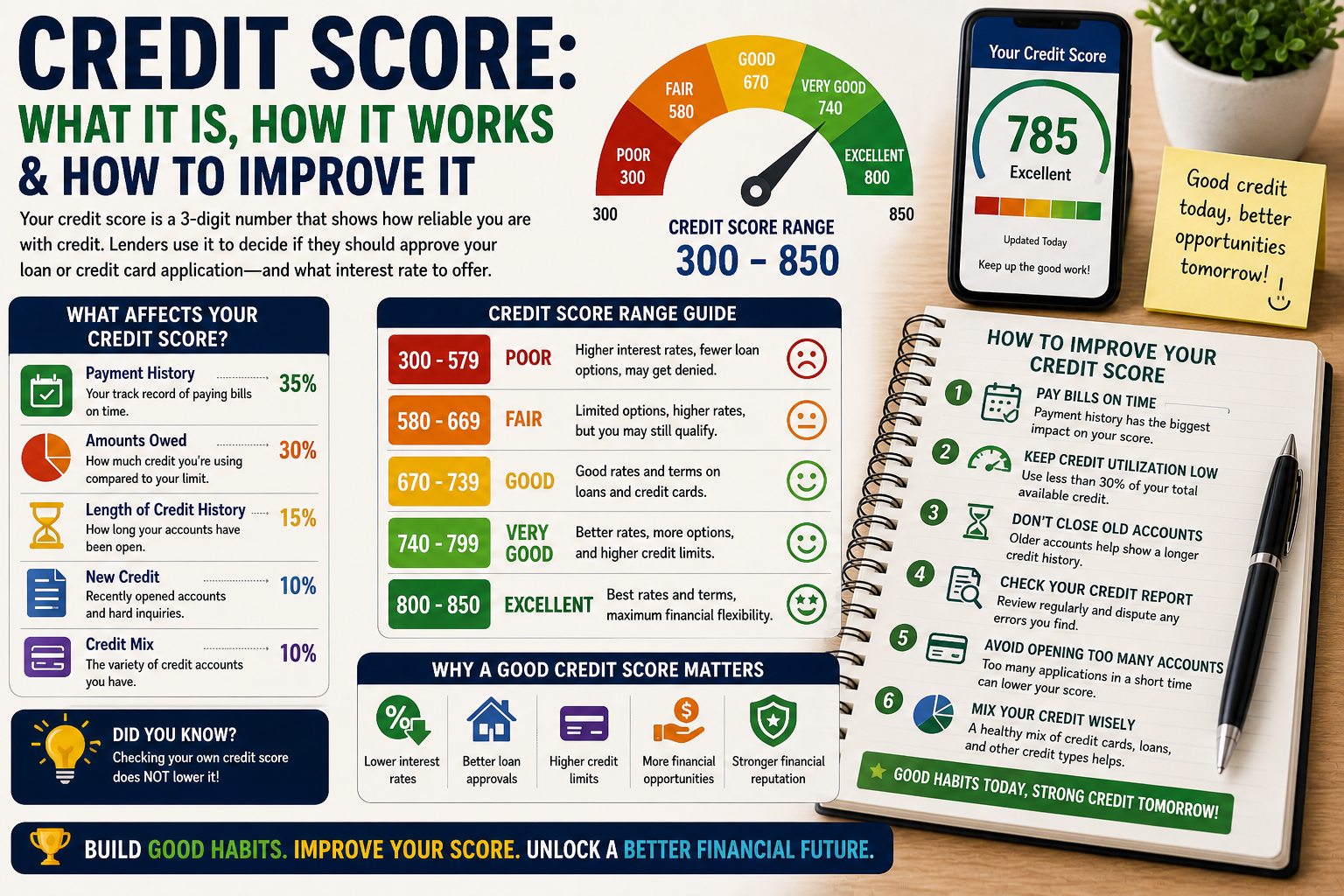
A credit score is an important part of personal finance that can affect your ability to access credit and the terms you may receive. Whether you are planning to apply for a credit card, personal loan, car financing, or another type of borrowing, understanding your credit score can help you make better financial decisions. A good credit history generally shows lenders that you have managed borrowed money responsibly, while missed or late payments can negatively affect your credit profile.
What Is a Credit Score?
A credit score is a numerical representation of information in your credit history. It is designed to help lenders assess how you have handled credit in the past and estimate the level of risk associated with lending to you.
Different countries and credit-reporting systems use different scoring models, so there is no single credit score range that applies everywhere. The factors used to calculate a score can also vary between scoring systems. For this reason, it is important to understand which credit bureau or scoring model applies to your situation.
Your credit report may contain information such as borrowing history, repayment records, outstanding balances, and applications for credit. Depending on the system, this information can contribute to your overall credit score.
Why Is Your Credit Score Important?
Your credit score can be an important factor when a financial institution evaluates a credit application. Lenders may use your credit history and other financial information when deciding whether to approve an application.
A stronger credit profile may make it easier to qualify for certain financial products, although approval is never based on a score alone. Lenders can also consider income, existing debts, employment, affordability, and their own lending criteria.
Understanding your credit score can therefore help you identify potential problems before applying for new credit and encourage better financial habits.
How Is a Credit Score Calculated?
The exact formula depends on the scoring model, but credit scores commonly consider several aspects of your credit behavior.
Payment History
Payment history can be one of the most important factors in many scoring systems. Consistently making payments on time demonstrates responsible credit management.
Late or missed payments may negatively affect your credit profile. Setting reminders or using automatic payments, where appropriate, can help you avoid accidentally missing due dates.
Credit Utilization
Credit utilization refers to how much of your available revolving credit you are using. For example, if you have a credit limit of $5,000 and a balance of $1,000, your utilization is 20%.
Lower utilization is generally viewed more positively by many scoring models. However, the exact impact depends on the scoring system and the rest of your credit profile.
Length of Credit History
The amount of time you have been using credit can also be considered. A longer history may provide more information about your borrowing and repayment behavior.
This does not mean you should borrow money simply to create a longer credit history. Responsible management of existing accounts is more important than opening unnecessary accounts.
New Credit Applications
Applying for several new credit accounts within a short period can affect your credit profile, particularly when applications result in hard inquiries.
Before applying, consider whether you actually need the new credit and whether it fits your financial situation.
Types of Credit
Some scoring models may consider the variety of credit accounts in your history. This can include revolving accounts and installment loans.
However, having many different types of debt is not automatically better. Taking on unnecessary debt simply to diversify your credit profile can create financial problems.
What Is a Good Credit Score?
There is no universal definition of a “good” credit score because scoring ranges and models differ between countries and credit bureaus.
For example, one scoring system may use a range that is completely different from another. Therefore, rather than focusing only on a particular number, you should understand the scoring system used by the lender or credit bureau relevant to you.
Your credit report is also important because it provides the underlying information that can influence your score.
How to Improve Your Credit Score
Improving your credit profile usually takes time. There is no legitimate shortcut that can instantly transform a poor credit history into an excellent one.
Pay Bills on Time
Making payments on time is one of the most useful habits for maintaining a healthy credit profile. Keep track of due dates and make sure you have enough funds available for scheduled payments.
If you have several accounts, creating a simple payment calendar can make managing them easier.
Keep Credit Balances Under Control
Avoid using more credit than you can comfortably repay. Keeping revolving balances manageable can help reduce financial pressure and may also benefit your credit profile.
Paying more than the minimum payment, when financially possible, can help reduce outstanding balances faster.
Check Your Credit Report
Review your credit report periodically for errors or unfamiliar activity. Incorrect information can potentially affect your credit profile.
If you discover inaccurate information, contact the relevant credit bureau or financial institution and follow its dispute process.
Avoid Unnecessary Credit Applications
Applying for credit frequently may create multiple inquiries and can make managing your finances more complicated.
Only apply for new credit when you have a genuine financial need and have reviewed the terms carefully.
Maintain Responsible Accounts
If you already have credit accounts that you manage responsibly, avoid making unnecessary changes without understanding the possible consequences.
Responsible, consistent financial behavior is generally more valuable than trying to manipulate your score through frequent account changes.
How Long Does It Take to Improve a Credit Score?
There is no fixed timeline for improving a credit score. The time required depends on the reason for the low score, the information in your credit history, and the scoring model being used.
Recent missed payments or high balances may take time to recover from even after you begin making payments consistently. Older positive payment information can gradually contribute to a stronger credit profile as your responsible financial behavior continues.
The key is consistency. Building better credit is usually a long-term process rather than something that happens overnight.
Does Checking Your Own Credit Score Hurt It?
Checking your own credit information generally does not have the same effect as applying for new credit. Credit-reporting systems distinguish between different types of inquiries.
However, the rules can vary by country and scoring model. It is always useful to understand whether a particular credit check is considered a soft inquiry or a hard inquiry before requesting it.
Credit Score vs. Credit Report
A credit score and a credit report are related but different.
A credit report contains detailed information about your credit history, such as accounts and repayment activity. A credit score is a numerical calculation based on information from your credit history and other factors determined by the applicable scoring model.
Think of the credit report as the detailed record and the credit score as a numerical summary used by a scoring system.
Common Credit Score Mistakes to Avoid
Several common mistakes can make credit management more difficult. Missing payment deadlines, taking on debt that you cannot comfortably repay, applying for unnecessary credit, and ignoring errors on your credit report can all create problems.
Another mistake is believing that paying someone can guarantee an instant improvement in your credit score. Be cautious of companies or individuals promising to erase accurate negative information or provide a guaranteed score increase.
Legitimate improvement generally comes from correcting genuine errors and maintaining responsible financial behavior over time.
Final Thoughts
Your credit score is an important part of personal finance, but it is only one part of your overall financial picture. Understanding how your local credit-reporting system works, paying bills on time, managing balances responsibly, checking your credit report, and avoiding unnecessary borrowing can help you build healthier financial habits.
Instead of focusing only on achieving a specific number, concentrate on maintaining consistent and responsible credit behavior. Over time, these habits can help create a stronger financial profile and make it easier to understand your options when you need credit.