

Financial Planning: A Complete Guide to Managing Your Money
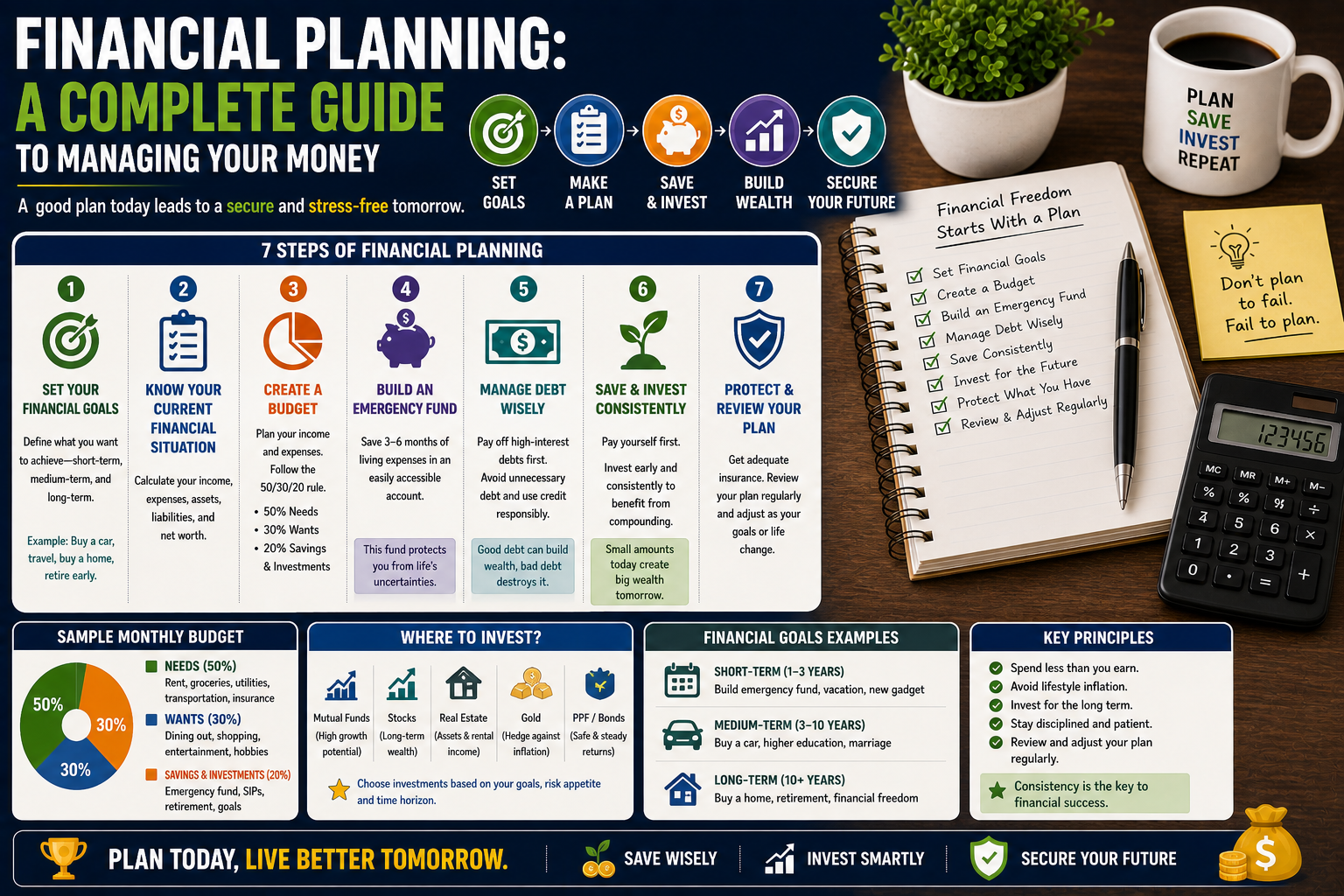
Financial planning is the process of organizing your money, setting financial goals, managing expenses, building savings, handling debt, and preparing for future needs. A well-structured financial plan can help you understand where your money goes and make more informed decisions about your finances.
Financial planning is not only for people with high incomes or large investments. Anyone can create a financial plan based on their income, expenses, priorities, and future goals.
What Is Financial Planning?
Financial planning involves looking at your current financial situation and creating a strategy for reaching your short-term and long-term goals.
A financial plan may include your income, monthly expenses, savings, debt, investments, insurance, emergency funds, and future financial objectives.
The purpose is not simply to save as much money as possible. Instead, financial planning helps you decide how to use your available resources in a way that supports your priorities.
Why Is Financial Planning Important?
Without a clear plan, it can be difficult to know whether your spending and saving habits are moving you toward your goals.
Financial planning can help you create a realistic budget, prepare for unexpected expenses, reduce unnecessary debt, and work toward major goals such as education, home ownership, business development, or retirement.
A financial plan can also provide a framework for adjusting your finances when your income, expenses, or priorities change.
Main Components of Financial Planning
A complete financial plan can include several important areas.
Budgeting
Budgeting is one of the foundations of financial planning. It involves tracking income and expenses and deciding how money should be allocated.
A basic budget can divide spending into categories such as housing, food, transportation, utilities, debt payments, savings, and entertainment.
The goal is to create a spending plan that reflects your actual financial situation rather than an unrealistic target.
Emergency Fund
An emergency fund is money set aside for unexpected expenses or financial disruptions.
Unexpected costs can include urgent repairs, medical expenses, job interruptions, or other essential bills.
The appropriate emergency savings amount depends on your circumstances, income stability, household expenses, and financial responsibilities. Keeping emergency savings accessible can help reduce the need to rely on expensive debt when unexpected costs arise.
Debt Management
Managing debt is another important part of financial planning. Not all debt has the same interest rate, repayment terms, or financial impact.
Start by listing your debts, balances, interest rates, minimum payments, and due dates. This provides a clearer picture of your overall obligations.
A financial plan can then help you determine how much extra money, if any, can be directed toward debt repayment while still covering essential expenses and maintaining appropriate savings.
Saving
Saving involves setting money aside for specific goals or future needs.
Short-term savings might be used for a planned purchase, education expense, travel, or upcoming bill. Longer-term savings may support larger financial objectives.
Automating regular savings, when possible, can make the process more consistent and reduce the temptation to spend money that was intended for savings.
Investing
Investing may be part of a long-term financial plan for people who have appropriate savings and are comfortable with investment risk.
Different investments have different levels of risk, potential return, liquidity, and time horizons. Stocks, bonds, mutual funds, exchange-traded funds, and other investments can serve different purposes.
Before investing, understand what you are buying, the risks involved, and how an investment fits into your overall financial goals.
How to Create a Financial Plan
Creating a financial plan does not have to be complicated. You can begin with a few basic steps.
Step 1: Review Your Current Finances
Start by identifying your monthly income, regular expenses, savings, debts, and other financial obligations.
Knowing your starting point makes it easier to set realistic goals.
Step 2: Set Financial Goals
Define what you want your money to accomplish.
Your goals could include building an emergency fund, paying off debt, saving for education, purchasing a home, starting a business, or preparing for retirement.
Try to make your goals specific and measurable so you can track progress over time.
Step 3: Create a Realistic Budget
Compare your income with your regular expenses. Identify areas where spending can be reduced without negatively affecting essential needs.
A good budget should be realistic enough to follow consistently. A plan that is too restrictive may be difficult to maintain.
Step 4: Build Savings
Set aside money regularly for emergencies and future goals. Even small contributions can become meaningful when maintained consistently over time.
If your income varies from month to month, consider setting savings targets based on your average income and essential expenses.
Step 5: Manage Debt
Review your outstanding debts and prioritize repayment based on your financial situation.
Paying bills on time can help avoid unnecessary fees and potential damage to your credit history. You should also understand the interest rates and terms associated with each debt.
Step 6: Review and Adjust
A financial plan should not remain unchanged forever. Your income, expenses, goals, and responsibilities can change.
Review your plan periodically and make adjustments when your circumstances change.
Short-Term vs Long-Term Financial Planning
Financial goals can generally be divided into short-term, medium-term, and long-term objectives.
Short-term goals may include building savings or paying a specific bill. Medium-term goals could involve saving for education, a vehicle, or a business. Long-term goals may include retirement or building long-term investments.
Different goals may require different strategies. Money needed soon may need to remain accessible, while long-term goals may allow more time to consider investments with greater fluctuations.
Common Financial Planning Mistakes
One common mistake is failing to track spending. Without understanding where money goes, it can be difficult to identify unnecessary expenses.
Another mistake is ignoring emergency savings. Unexpected costs can quickly disrupt a budget when there is no financial reserve.
Taking on more debt than you can comfortably repay is another potential problem. Before borrowing, consider the total cost and whether the repayment fits within your budget.
Some people also focus entirely on saving while ignoring important financial risks or failing to review their plan when circumstances change.
Financial Planning and Retirement
Retirement planning is an important part of long-term financial planning. The amount needed for retirement depends on factors such as expected expenses, income sources, inflation, investment returns, retirement age, and life expectancy.
Starting early can provide more time for savings and investments to potentially grow. However, the appropriate retirement strategy varies from person to person.
Review available retirement accounts, employer programs, government benefits, and investment options that apply to your country and circumstances.
How Technology Can Help With Financial Planning
Financial apps, spreadsheets, budgeting tools, and online banking platforms can make it easier to monitor income and expenses.
Some tools can automatically categorize transactions, track spending patterns, set savings goals, and provide reminders for upcoming payments.
Technology can make financial management more convenient, but you should still review your information regularly and protect your financial accounts with strong security practices.
Benefits of Having a Financial Plan
A financial plan can provide a clearer picture of your financial situation and help you make decisions with greater structure.
It can also make it easier to prioritize goals, manage debt, build savings, and prepare for unexpected expenses.
Perhaps most importantly, financial planning encourages you to think about both your current needs and future objectives rather than making financial decisions one transaction at a time.
Final Thoughts
Financial planning is a practical process that can help you manage your money and work toward meaningful financial goals. It starts with understanding your current situation and then creating a realistic strategy for budgeting, saving, debt management, investing, and future planning.
You do not need a complicated system to get started. Track your finances, establish clear goals, create a manageable budget, build appropriate savings, and review your plan regularly.
Financial circumstances can change over time, so flexibility is just as important as consistency. A financial plan should evolve as your income, expenses, responsibilities, and goals change.