

Retirement Planning: A Complete Guide to Your Financial Future
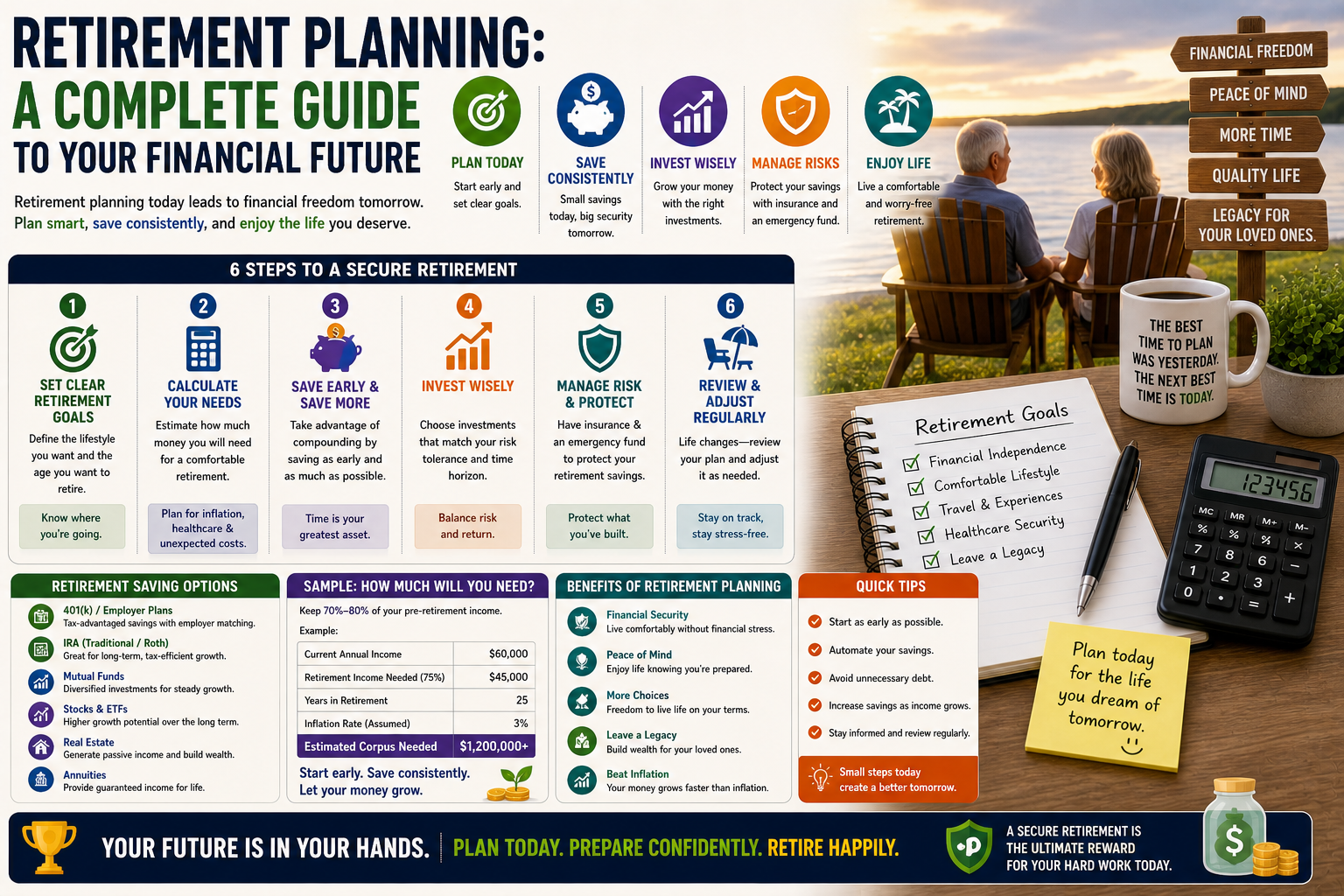
Retirement planning is the process of preparing financially for the time when you stop working or reduce your employment. It involves estimating future expenses, building savings, considering investments, managing debt, and creating a strategy for generating income during retirement.
Starting retirement planning early can give you more time to build savings and adjust your strategy as your circumstances change. However, it is never too late to review your finances and create a plan based on your current situation and future goals.
What Is Retirement Planning?
Retirement planning involves creating a financial strategy for the years when employment income may decrease or stop.
A retirement plan can include savings, investments, pension benefits, government programs, real estate, business income, and other potential sources of retirement income.
The amount you need for retirement depends on several factors, including your expected lifestyle, future expenses, inflation, retirement age, health-related costs, and available income sources.
Why Is Retirement Planning Important?
Retirement can last for many years, which means your savings may need to support you for a significant period.
Without a plan, it can be difficult to determine whether your savings will be sufficient. Retirement planning allows you to estimate your future needs and identify potential gaps before retirement arrives.
A well-organized plan can also help you make decisions about saving, investing, debt repayment, and when you may be able to reduce or stop working.
When Should You Start Retirement Planning?
There is no single perfect age to begin retirement planning. Starting earlier generally gives you more time to save and potentially benefit from investment growth.
Someone in their twenties may have several decades to build retirement savings, while someone closer to retirement may need to focus more closely on expenses, savings rates, investment risk, and available income sources.
If you have not started yet, beginning now can still be useful. The most important step is understanding your current financial position and creating a realistic plan.
How Much Money Do You Need for Retirement?
There is no universal retirement savings number that works for everyone.
Your target depends on your expected retirement expenses, desired lifestyle, housing costs, healthcare needs, inflation, taxes, retirement age, and other sources of income.
Start by estimating your current annual expenses and consider which costs may increase, decrease, or disappear after retirement.
You should also consider unexpected expenses and the possibility that retirement could last longer than originally expected.
Calculate Your Retirement Expenses
Creating a retirement budget is an important step.
Consider essential expenses such as housing, food, utilities, transportation, insurance, healthcare, and debt payments. Then consider discretionary spending such as travel, hobbies, entertainment, and gifts.
Some expenses may change after retirement. For example, commuting costs may decrease, while healthcare or leisure expenses could increase.
Creating different scenarios can help you understand how your financial needs might change.
Build Retirement Savings
Regular saving is one of the foundations of retirement planning.
If your employer provides a retirement plan or pension program, understand how it works and what benefits may be available. If you are self-employed, research retirement savings and investment options available in your country.
Automating contributions can make saving more consistent. Even when contributions are relatively small, regular saving over a long period can help build financial reserves.
The Role of Investing in Retirement Planning
Investing can be an important part of long-term retirement planning. Depending on your circumstances, investments may include stocks, bonds, mutual funds, exchange-traded funds, property, or other assets.
Investments can potentially grow over time, but they also involve risk. Values can rise and fall, and returns are not guaranteed.
Your investment strategy should consider your time horizon, financial goals, risk tolerance, and need for accessible cash.
Diversification and Retirement Savings
Diversification means spreading investments across different assets rather than relying heavily on a single investment.
The purpose is to reduce the impact that poor performance in one investment may have on the overall portfolio.
However, diversification does not eliminate investment risk. Different assets can lose value under different economic conditions, so it is important to understand what you own and why you own it.
Managing Debt Before Retirement
Entering retirement with significant high-cost debt can put pressure on your future income.
Review your mortgages, credit cards, personal loans, and other debts as part of your retirement plan. Consider interest rates, repayment schedules, and how each debt fits into your overall financial strategy.
Paying down expensive debt can reduce future financial obligations, but the best approach depends on your savings, income, interest rates, and other priorities.
Emergency Savings for Retirement
An emergency fund remains important after retirement.
Unexpected expenses can arise at any age, including home repairs, healthcare costs, family emergencies, or other major bills.
Maintaining accessible savings can help you cover unexpected expenses without immediately selling long-term investments or taking on additional debt.
The appropriate emergency reserve depends on your expenses, income sources, insurance coverage, and overall financial situation.
Retirement Income Sources
Retirement income can come from multiple sources.
These may include personal savings, investment income, pensions, government benefits, rental income, part-time employment, or business income.
Understanding which sources will be available and when they can be accessed is an important part of retirement planning.
Do not assume that one source of income will cover all future expenses. Estimate your expected income and compare it with your projected retirement spending.
Inflation and Retirement Planning
Inflation can significantly affect the purchasing power of money over long periods.
For example, an amount that comfortably covers your expenses today may not provide the same purchasing power decades from now.
When estimating retirement needs, consider how prices may change over time. This is especially important for long-term goals because retirement savings may need to support you for many years.
Healthcare and Retirement
Healthcare costs are an important consideration in retirement planning.
Depending on your country and available healthcare system, you may need to budget for insurance premiums, medical treatment, medicines, dental care, or other health-related expenses.
Because healthcare costs can be difficult to predict, maintaining an appropriate financial reserve and understanding available coverage can help with long-term planning.
Common Retirement Planning Mistakes
One common mistake is delaying retirement planning for too long. Waiting can reduce the amount of time available to save and make adjustments.
Another mistake is underestimating future expenses. Retirement budgets should account for essential costs, lifestyle spending, inflation, and unexpected expenses.
Relying too heavily on one investment or income source can also create unnecessary risk.
Some people also forget to review their retirement plan after major life changes, such as changing jobs, purchasing a home, getting married, or experiencing a significant change in income.
How to Create a Retirement Plan
Start by determining your desired retirement age and estimating your future expenses.
Next, list your current savings, investments, pension benefits, and other potential retirement income sources.
Compare your expected future income with your estimated expenses. If there is a gap, consider increasing savings, adjusting expenses, changing your investment strategy, or exploring additional income sources.
Review the plan regularly rather than treating it as a one-time task.
Review Your Retirement Plan Regularly
Financial circumstances can change significantly over time. Your income, expenses, investments, family responsibilities, and retirement goals may all change.
Reviewing your retirement plan periodically allows you to make adjustments before small problems become larger ones.
As retirement approaches, you may also want to focus more closely on how your savings will be converted into sustainable income.
Final Thoughts
Retirement planning is about preparing today for your financial needs in the future. It involves setting realistic goals, estimating expenses, building savings, managing debt, considering investments, and understanding potential retirement income sources.
There is no single retirement strategy that works for everyone. Your plan should reflect your income, lifestyle, age, financial responsibilities, risk tolerance, and long-term goals.
The most useful approach is to start with what you know today, create a realistic plan, and review it regularly as your circumstances change.