

Debt Management: A Complete Guide to Managing and Paying Off Debt
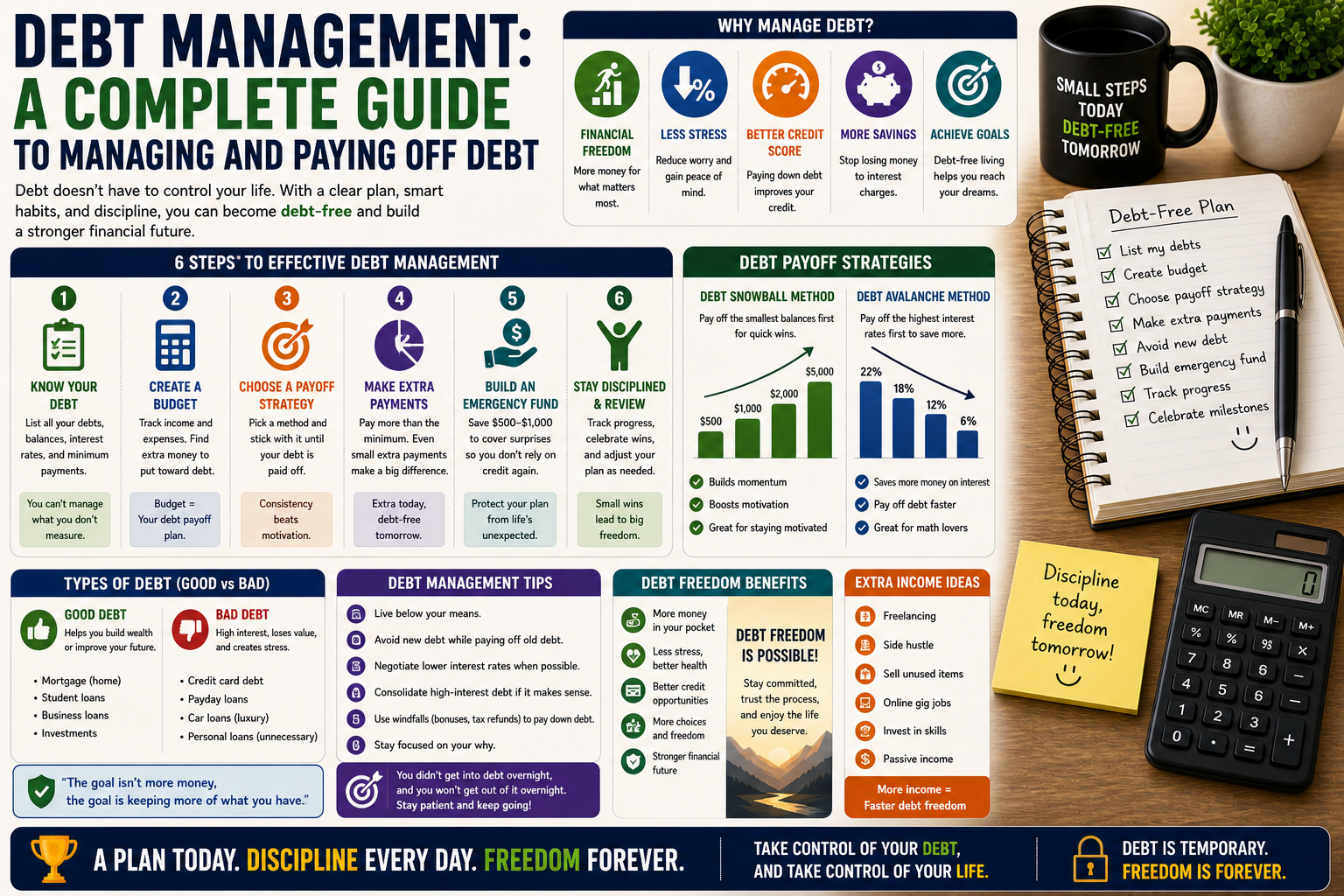
Debt management is the process of organizing, controlling, and repaying money that you owe. Whether your debt comes from credit cards, personal loans, education expenses, medical bills, or other borrowing, having a clear repayment strategy can make your finances easier to manage.
Debt itself is not always harmful. Borrowing can sometimes help people purchase important assets or manage necessary expenses. Problems can arise when debt becomes difficult to repay, interest costs grow, or monthly payments begin to put pressure on the household budget.
What Is Debt Management?
Debt management involves understanding your outstanding debts and creating a practical plan to repay them while managing your regular living expenses.
A debt management plan may include listing every debt, reviewing interest rates, organizing payment due dates, reducing unnecessary spending, and deciding how much additional money can be directed toward repayment.
The goal is to make debt more manageable and gradually reduce the amount owed.
Why Is Debt Management Important?
Poorly managed debt can make it difficult to save money and achieve other financial goals. High-interest balances can grow quickly when payments are missed or only minimum payments are made.
Effective debt management can help you understand your financial obligations, avoid missed payments, reduce unnecessary interest costs, and create a clearer path toward becoming debt-free.
It can also help reduce financial stress by replacing an unclear situation with a structured repayment plan.
Types of Debt
Not all debt works in the same way. Understanding the different types can help you decide how to prioritize repayment.
Credit Card Debt
Credit cards are a form of revolving credit. If you carry a balance from one billing period to another, interest may be charged according to the card’s terms.
Because credit card interest rates can be relatively high, carrying large balances can become expensive.
Personal Loans
Personal loans usually provide a fixed amount that is repaid through scheduled payments over a defined period.
The interest rate and repayment terms vary by lender and borrower. Review the total repayment cost before taking out a personal loan.
Student or Education Debt
Education-related borrowing can help cover tuition and other educational expenses. The repayment rules depend on the lender, government program, or institution involved.
Borrowers should understand interest rates, repayment schedules, deferment options, and other applicable terms.
Mortgage Debt
A mortgage is typically a long-term loan used to purchase property. It is secured by the property under the terms of the agreement.
Because mortgages can involve large balances and long repayment periods, even small differences in interest rates can affect the overall cost significantly.
How to Start Managing Your Debt
The first step is to understand exactly how much you owe.
Create a list containing each debt, outstanding balance, interest rate, minimum payment, and due date. This gives you a complete view of your obligations.
Once everything is organized, compare your total monthly debt payments with your income and essential living expenses.
This information can help you determine how much money is realistically available for additional debt repayment.
Create a Debt Repayment Budget
A debt repayment budget should begin with essential expenses such as housing, food, utilities, transportation, and necessary insurance.
After covering essential costs and required debt payments, determine how much additional money can reasonably go toward reducing your balances.
Avoid creating a repayment budget that is so aggressive that you cannot maintain it. Consistency is important when paying down debt.
Debt Snowball Method
The debt snowball method focuses on paying off the smallest debt balance first while making the required payments on other debts.
Once the smallest balance is eliminated, the money previously used for that payment can be redirected toward the next debt.
This approach can provide a sense of progress as individual balances are eliminated. However, it does not necessarily minimize total interest costs.
Debt Avalanche Method
The debt avalanche method prioritizes debts with the highest interest rates.
You continue making required payments on all debts while directing extra money toward the debt with the highest interest rate.
Once that balance is paid, you move to the next highest-rate debt.
This approach can reduce interest costs over time, although the first debt may take longer to eliminate if it has a large balance.
Consolidating Debt
Debt consolidation involves combining multiple debts into a single loan or account.
Depending on the terms, consolidation may simplify payments or potentially reduce the interest rate. However, it does not automatically reduce the amount you owe.
Before consolidating, compare the new interest rate, fees, repayment period, and total cost with your existing debts.
A lower monthly payment can sometimes result from extending the repayment period, which may increase the total interest paid.
Negotiate With Creditors
In some situations, borrowers may be able to contact creditors to discuss repayment options.
Depending on the lender and circumstances, possibilities may include changing payment arrangements, discussing hardship options, or exploring other available programs.
Never assume that a creditor will approve a particular arrangement. Ask for the terms in writing and make sure you understand any effect on your account or credit history.
Avoid Taking on New Debt
While paying down existing balances, consider whether new borrowing is necessary.
Using additional credit to cover regular spending can make it harder to reduce existing debt. Before making a purchase with borrowed money, consider whether it is necessary and whether the repayment will fit comfortably into your budget.
Reducing new borrowing can allow more of your available income to go toward existing balances.
Build an Emergency Fund
It can be difficult to focus entirely on debt repayment if every unexpected expense requires new borrowing.
An emergency fund can provide a financial buffer for unexpected costs. The appropriate amount depends on your income, expenses, job stability, and personal circumstances.
Even a modest reserve can help reduce the need to use credit for every unexpected expense.
Debt Management and Credit Score
Your debt management habits can affect your credit profile.
Making payments on time and managing credit balances responsibly can support a healthier credit history. On the other hand, missed payments and certain other negative events can damage your credit profile.
Reducing debt can also improve your overall financial position, although the effect on a credit score depends on the scoring model and your individual credit history.
Common Debt Management Mistakes
One common mistake is ignoring debt because the total amount feels overwhelming. Avoiding statements or payment reminders does not make the debt disappear.
Another mistake is focusing only on the monthly payment rather than the total cost of borrowing. A lower monthly payment can sometimes mean a longer repayment period and more interest.
Taking on new debt to cover unnecessary spending is another potential problem.
It is also risky to trust companies that promise guaranteed debt elimination or instant financial solutions without carefully checking their terms and reputation.
When to Seek Professional Help
If debt payments have become difficult to manage, consider seeking help from a legitimate financial counselor or qualified professional who can review your circumstances.
Professional guidance may be particularly useful when you have multiple debts, persistent payment problems, or difficulty creating a workable budget.
Before paying for debt assistance, understand exactly what services are being offered, what fees apply, and what results can realistically be expected.
How Long Does It Take to Pay Off Debt?
There is no single timeline for becoming debt-free. The time required depends on the total amount owed, interest rates, minimum payments, additional payments, and income available for repayment.
Increasing payments can shorten the repayment period, while adding new debt can extend it.
The most important factor is maintaining a sustainable strategy and consistently reducing your outstanding balances.
Final Thoughts
Debt management is about taking control of your financial obligations through organization, budgeting, and consistent repayment. Start by listing your debts, understanding their interest rates and terms, and creating a realistic repayment budget.
Whether you use the debt snowball method, debt avalanche method, consolidation, or another strategy, choose an approach that fits your financial circumstances and that you can maintain.
Reducing debt takes time, but a clear plan and consistent financial habits can help you move toward greater financial stability.