

Personal Finance: A Complete Beginner’s Guide to Managing Money
Introduction to Personal Finance
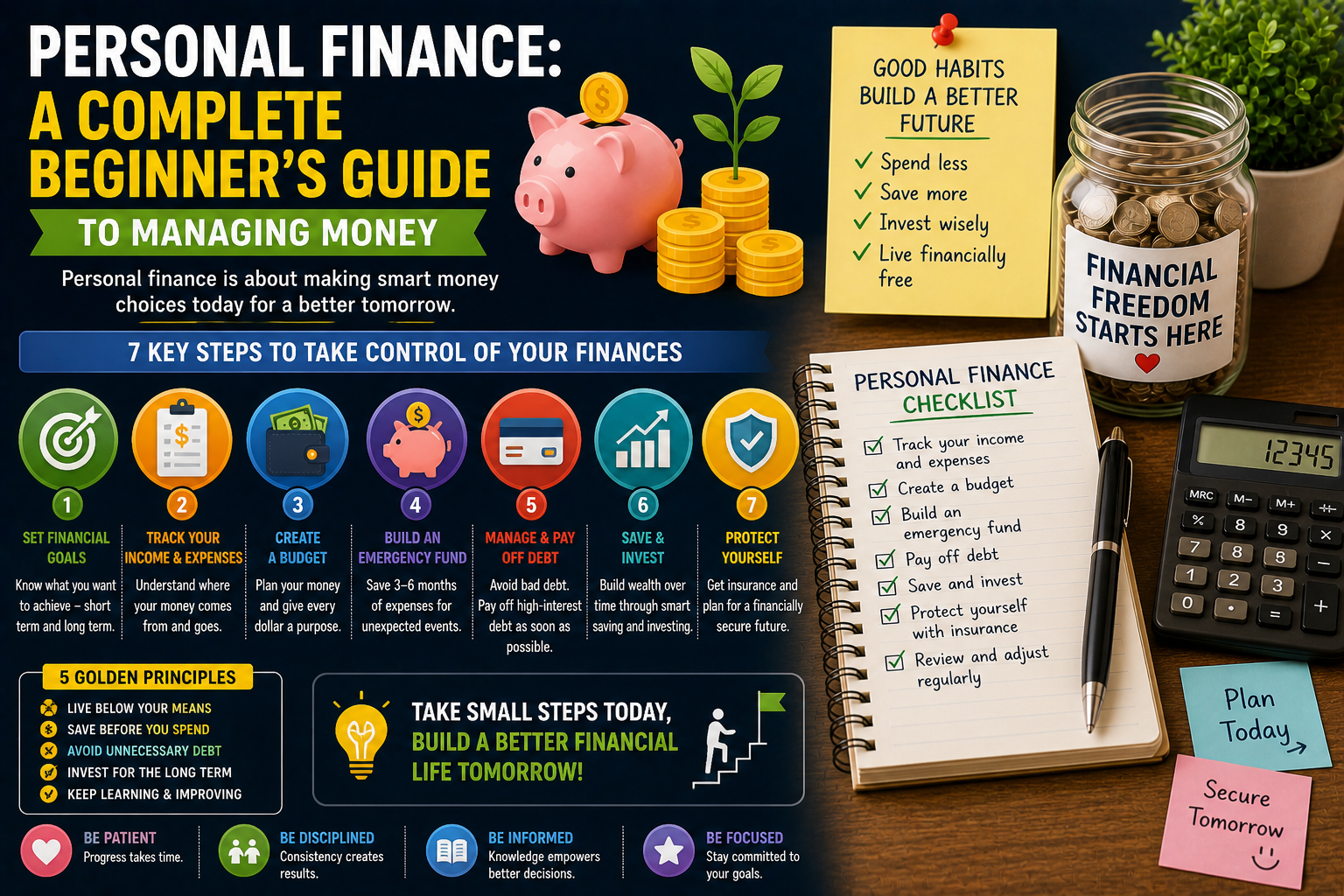
Personal finance is the process of managing your money to meet your needs, achieve your goals, and prepare for the future. It includes everything from earning and spending money to saving, investing, managing debt, and planning for major life events. Whether you are a student, a young adult, a working professional, or someone managing a household, understanding personal finance can help you make more informed financial decisions. You do not need to be wealthy or have a high income to begin managing money effectively. Simple habits, such as tracking expenses, setting realistic goals, and saving regularly, can help you develop greater control over your finances. Learning personal finance basics is a useful first step toward building financial stability and confidence.
What Is Personal Finance?
Personal finance refers to the financial decisions an individual or household makes to manage income, expenses, savings, debts, and investments. It involves understanding how money comes in, where it goes, and how it can be used to support both current needs and future goals. For example, paying monthly bills, saving for education, planning a family budget, and preparing for unexpected expenses are all parts of personal finance. Good financial management does not mean avoiding every purchase or saving every available amount. Instead, it means making thoughtful choices based on your income, responsibilities, priorities, and financial circumstances. A practical personal finance plan helps balance today’s needs with tomorrow’s goals.
Why Personal Finance Is Important
Personal finance is important because money decisions affect many areas of everyday life. Without a clear plan, it can become difficult to manage expenses, prepare for emergencies, or make progress toward important goals. A basic financial plan can help you understand your spending habits, reduce unnecessary costs, and decide how much money to save. It can also help you prepare for larger expenses, such as education, housing, transportation, or family responsibilities. Financial knowledge may reduce uncertainty and help you avoid decisions made under pressure. Although no plan can prevent every financial challenge, developing healthy money habits can make it easier to respond when circumstances change.
Create a Realistic Personal Budget
A budget is one of the most useful tools in personal finance. It helps you compare your income with your expenses and decide how to use your money throughout the month. Start by calculating your regular income after deductions, then list essential expenses such as housing, food, utilities, transportation, education, and debt payments. Include flexible spending, occasional expenses, and savings contributions as well. Your budget should reflect your actual circumstances rather than an ideal situation that is difficult to maintain. Some people use a spreadsheet, budgeting app, notebook, or simple list. The best method is one you can update consistently. Review your budget regularly and adjust it when your income, expenses, or priorities change.
Choose a Budgeting Method That Works for You
There is no single budgeting method that works for everyone. Some people prefer a zero-based budget, where every unit of income is assigned a purpose. Others use a percentage-based approach to divide money between needs, wants, and savings. The 50/30/20 rule is one commonly discussed framework, but it may not fit every income level or cost of living. You can also create a simple weekly spending limit if monthly budgeting feels overwhelming. The goal is not to follow a specific formula perfectly. Instead, choose a method that helps you cover essential expenses, manage spending, and make progress toward your financial goals.
Track Your Income and Expenses
Tracking your income and expenses helps you understand your financial habits. Small purchases can add up over time, and without tracking, it may be difficult to identify where your money is going. For one month, record your regular bills, daily purchases, subscriptions, transportation costs, and other spending. At the end of the month, review the information and look for patterns. You may discover that certain expenses are higher than expected or that some services are no longer useful. Use these observations to make realistic adjustments rather than cutting every enjoyable activity. Expense tracking is not about judging yourself; it is about gaining information that supports better decisions.
Build a Consistent Saving Habit
Saving money is an important part of personal finance because it helps you prepare for future expenses and financial goals. You can save for education, a major purchase, travel, household needs, or unexpected situations. Start with an amount that fits your budget, even if it seems small. Consistency is often more practical than setting an ambitious target that you cannot maintain. If possible, set aside money when you receive your income instead of waiting until the end of the month. Keep your savings in a suitable, secure place where you can access them according to your goals. As your financial situation improves, you may be able to increase your contributions gradually.
Create an Emergency Fund
An emergency fund is money reserved for unexpected expenses, such as urgent repairs, medical costs, temporary income loss, or essential family needs. Without emergency savings, an unexpected bill may force you to borrow money or delay other important payments. Begin with a small, achievable target and build it gradually. Over time, some people aim to save enough to cover several months of essential expenses, but the appropriate amount depends on income stability, household responsibilities, and personal circumstances. Keep emergency savings separate from everyday spending money, while ensuring that the funds are accessible when genuinely needed. If you use part of the fund, make a plan to replenish it when possible.
Manage Debt Responsibly
Debt management is another essential part of personal finance. Loans and credit can sometimes help people meet important needs, but borrowing also creates repayment obligations and may involve interest, fees, or other costs. Start by listing your debts, including balances, interest rates, minimum payments, and due dates. Make required payments on time where possible, and review your budget to determine whether you can pay extra toward a balance. Two common repayment approaches are the debt avalanche method, which prioritizes higher-interest debt, and the debt snowball method, which prioritizes smaller balances. Each approach has different practical advantages. Avoid taking on new debt without understanding the full repayment cost and whether the payments fit your budget.
Understand Credit and Credit Scores
Credit refers to borrowing money with an agreement to repay it, while a credit score is a numerical measure used in some financial systems to help assess creditworthiness. Credit scoring practices and reporting rules vary by country and lender. Where credit scores are used, factors may include payment history, outstanding balances, credit history, and other information. Paying bills on time, reviewing account statements, and avoiding borrowing beyond your ability to repay can support responsible credit management. If credit reports are available in your country, check them through appropriate official or authorized channels and report information that appears incorrect. Remember that credit is a financial tool, not a measure of your personal worth.
Learn the Basics of Investing
Investing means putting money into assets with the goal of potential future growth or income. Common investment categories include stocks, bonds, mutual funds, exchange-traded funds, and other assets. Each investment has different risks, costs, and potential returns, and no investment guarantees a profit. Before investing, consider your financial goals, time horizon, ability to handle losses, and need for accessible savings. It is generally useful to understand basic financial products before committing money. Beginners should be cautious of offers promising guaranteed high returns, pressure to invest immediately, or opportunities they cannot explain. Research investments carefully and check whether providers are appropriately regulated in your jurisdiction. This article is educational and is not individualized investment advice.
Set Short-Term and Long-Term Financial Goals
Financial goals give your money a clear purpose. Short-term goals may include saving for a course, replacing a necessary device, or paying down a small debt. Long-term goals may involve education, housing, retirement, or building financial security for your family. Make each goal specific and realistic. Estimate how much money you need, when you may need it, and how much you can set aside regularly. If you have several goals, prioritize them according to urgency and importance. Writing down your goals and reviewing your progress can help you stay organized. Remember that goals can change as your circumstances change, so it is reasonable to adjust your plan when necessary.
Improve Your Financial Habits Over Time
Strong personal finance habits develop through regular practice, not overnight changes. Review your spending, savings, and debt payments at least once a month. Look for small improvements that are sustainable, such as comparing prices before major purchases, planning meals, reviewing subscriptions, or setting aside money for predictable annual expenses. Avoid comparing your financial progress with other people because their income, responsibilities, and circumstances may be very different from yours. Be careful with financial advice on social media, especially when it promotes quick wealth or high-risk decisions without explaining potential losses. Reliable financial education, thoughtful planning, and realistic expectations can help you make decisions that fit your situation.
Conclusion: Take Control of Your Personal Finance
Personal finance is an essential life skill that can help you manage money with greater confidence and purpose. By creating a realistic budget, tracking expenses, saving consistently, preparing for emergencies, managing debt, and learning about investments, you can build a stronger financial foundation over time. You do not need to master every financial concept at once. Start with one manageable step, such as recording your expenses or setting a small savings goal, and build from there. Review your progress regularly and adjust your plan as your needs and circumstances evolve. With patience, practical knowledge, and consistent habits, personal finance can become a useful part of your everyday life and long-term planning.