

Money Management: A Complete Guide to Managing Your Finances
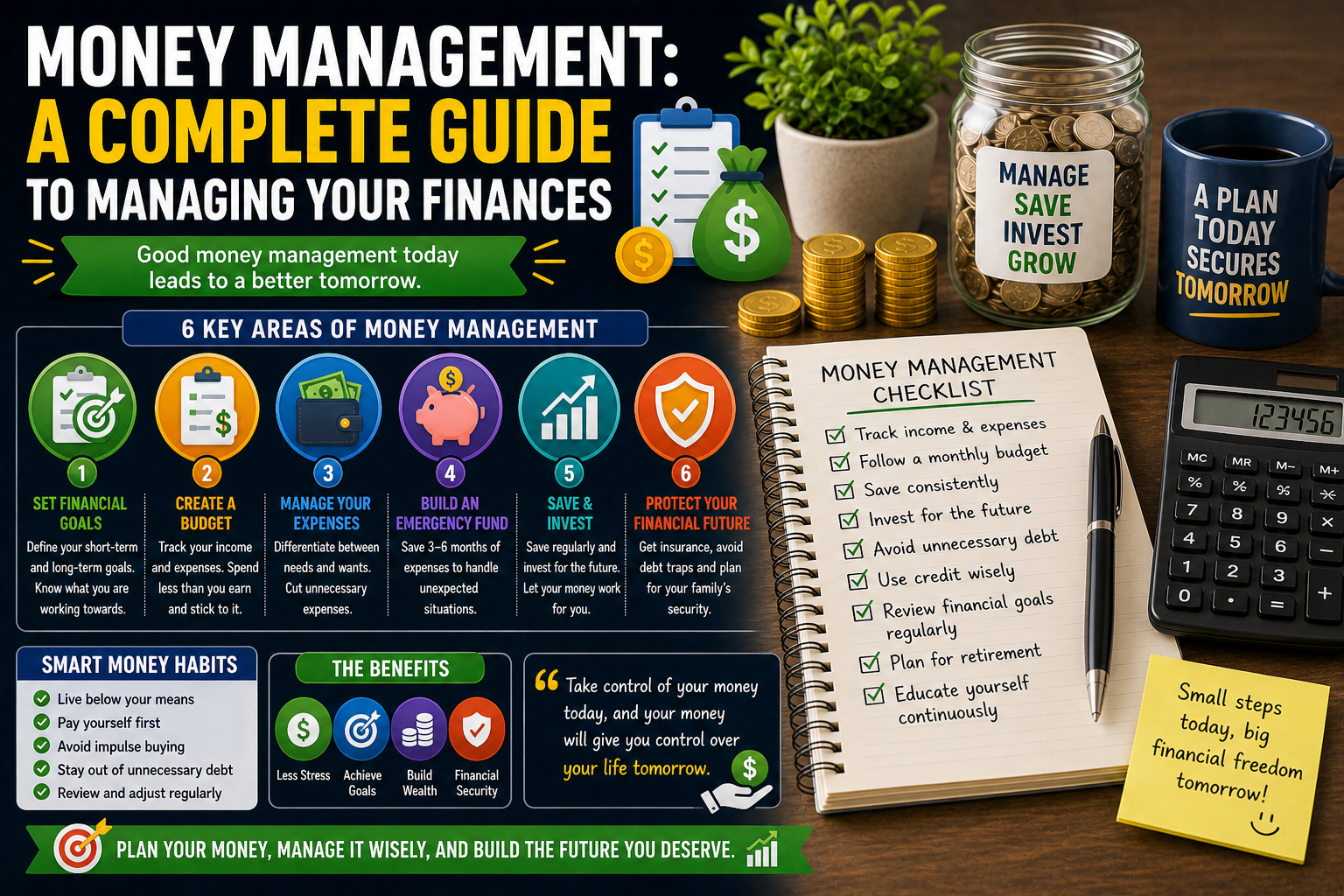
Introduction to Money Management
Money management is the process of organizing and controlling your finances so you can meet your current needs while preparing for future goals. It includes budgeting, saving, spending, debt management, financial planning, and understanding how to use your income responsibly. Good money management is not only about earning more money. It is also about making thoughtful decisions with the money you already have.
Many people struggle financially because they do not have a clear picture of their income and expenses. Even a reasonable income can become difficult to manage when spending is not planned. On the other hand, developing simple financial habits can make it easier to control expenses, save regularly, and prepare for unexpected situations. The goal of money management is to create a system that works with your personal circumstances and financial priorities.
What Is Money Management?
Money management refers to the practical process of handling income, expenses, savings, debt, and financial goals. It involves deciding how much money should be spent, saved, or used for financial obligations.
For example, creating a monthly budget is a money management activity. Tracking daily purchases, setting aside money for emergencies, paying bills on time, and reviewing your financial goals are also important parts of managing money.
Effective money management does not require complicated financial strategies. A simple system that you can consistently follow may be more useful than a complicated plan that is difficult to maintain.
Why Is Money Management Important?
Money management is important because financial decisions affect almost every part of everyday life. Without a plan, it can be easy to spend more than expected or overlook important expenses.
A good money management system can help you:
- Understand where your money goes
- Control unnecessary spending
- Build savings
- Prepare for unexpected expenses
- Manage debt more effectively
- Work toward financial goals
- Make more informed financial decisions
Financial circumstances are different for every person, so there is no universal formula for managing money. Your approach should reflect your income, expenses, responsibilities, location, and personal goals.
Create a Monthly Budget
One of the first steps in money management is creating a realistic budget. A budget gives you a clear picture of how much money comes in and where it needs to go.
Start by calculating your regular income. Then list your essential expenses, such as housing, food, utilities, transportation, education, insurance, and debt payments. After that, include flexible spending and savings.
Your budget should be realistic. If you create spending limits that are impossible to maintain, you may quickly abandon the plan. Instead, review your actual spending and create limits based on your financial situation.
A budget can be created using a spreadsheet, notebook, budgeting application, or simple document. The specific tool matters less than using it consistently.
Review Your Budget Regularly
A budget should not be treated as a permanent document. Your income and expenses can change over time.
Review your budget at the end of each month. Compare your planned spending with your actual spending. If one category consistently costs more than expected, adjust your budget instead of ignoring the difference.
Regular reviews can help you identify financial problems before they become larger challenges.
Track Your Spending
Tracking expenses is one of the simplest ways to improve money management. Without tracking, small purchases can easily go unnoticed.
For several weeks or a full month, record your purchases. Include groceries, transportation, subscriptions, entertainment, online purchases, bills, and other expenses.
Once you have the information, group your expenses into categories. You may notice that certain categories are taking more of your income than expected.
The purpose of expense tracking is not to eliminate every enjoyable purchase. Instead, it helps you understand your financial habits and decide which expenses deserve priority.
Separate Needs From Wants
Understanding the difference between needs and wants can improve spending decisions.
Needs are expenses that are important for basic living or financial responsibilities, such as food, housing, utilities, transportation, and required payments. Wants are purchases that may improve comfort or entertainment but are not essential.
This does not mean you should never spend money on wants. Enjoyable spending can be part of a healthy budget. The important thing is to make sure optional purchases do not interfere with essential expenses, savings, or financial obligations.
Before making a non-essential purchase, consider whether it fits within your planned spending for the month.
Build an Emergency Fund
An emergency fund is money reserved for unexpected but necessary expenses. Examples can include urgent repairs, unexpected bills, or a temporary reduction in income.
Without emergency savings, people may need to rely on credit or borrowing when unexpected costs appear. Having savings available can provide additional financial flexibility.
Start with a small target if building a large emergency fund feels difficult. Once you reach your first target, continue adding money as your budget allows. Some people eventually aim to keep several months of essential expenses available, but the appropriate amount depends on individual circumstances.
Keep emergency savings separate from everyday spending money where practical, while making sure the funds are accessible when genuinely needed.
Develop a Regular Saving Habit
Saving does not have to begin with a large amount. The most important part for many people is developing consistency.
Decide how much you can reasonably save from each income payment. If possible, save before spending money on optional purchases.
You can create separate savings goals for different purposes, such as:
- Emergency savings
- Education
- Major purchases
- Travel
- Family expenses
- Long-term financial goals
Having a specific purpose for savings can make it easier to stay focused.
Manage Debt Carefully
Debt is another major part of money management. Loans and credit can provide access to money when needed, but borrowing creates repayment responsibilities and may involve interest and fees.
Start by making a list of your debts. Record the balance, interest rate, minimum payment, and due date for each one.
Make required payments on time and, when your budget allows, consider putting additional money toward debt. Two commonly discussed repayment methods are the debt avalanche and debt snowball approaches.
The debt avalanche method generally focuses on higher-interest debt first, while the debt snowball method focuses on smaller balances first. Your choice may depend on your financial circumstances and personal preferences.
Most importantly, understand the total cost of borrowing before taking on additional debt.
Avoid Unnecessary Spending
Reducing unnecessary expenses can free up money for savings and financial goals. Start by looking for expenses that provide little value to you.
For example, you may find subscriptions you rarely use, frequent impulse purchases, or services that can be replaced with lower-cost alternatives.
You do not need to cut everything at once. Small changes can be easier to maintain. Consider reviewing recurring payments, comparing prices before major purchases, and creating a shopping list before going to a store.
The goal is to spend intentionally rather than simply spending less.
Be Careful With Impulse Purchases
Impulse purchases can make budgeting more difficult because they are often not included in planned spending.
A simple strategy is to wait before buying non-essential items. For larger purchases, give yourself more time to compare prices and consider whether the item is genuinely necessary.
You can also create a specific category in your budget for entertainment and optional purchases. This allows you to enjoy some flexible spending without losing control of your overall finances.
Set Clear Financial Goals
Money management becomes easier when you know what you are working toward.
Financial goals can be short-term, medium-term, or long-term. A short-term goal might involve saving for an upcoming expense. A medium-term goal could be paying down debt or building a larger emergency fund. Long-term goals might include education, housing, retirement, or other major financial objectives.
Write down your goals and estimate how much money each one requires. Then determine what you can realistically contribute each month.
Breaking a large goal into smaller steps can make it feel more manageable.
Learn About Investing
Investing can be part of long-term money management, but it involves risk and should be approached carefully.
Investment options can include stocks, bonds, mutual funds, exchange-traded funds, and other financial assets. Each option has different risks, costs, and potential returns.
Before investing, understand your financial goals, investment time horizon, and ability to tolerate losses. Make sure you understand what you are buying and be cautious about offers that promise guaranteed high returns.
It is generally sensible to establish basic financial stability and understand your obligations before taking significant investment risks. Investment rules and available products also vary between countries.
Manage Your Income Wisely
Increasing income can improve your financial flexibility, but managing that income effectively remains important.
When your income increases, it can be tempting to immediately increase spending. This is sometimes called lifestyle inflation. Instead, consider directing part of additional income toward savings, debt repayment, or long-term goals.
You can also look for legitimate ways to improve your earning potential, such as developing useful skills, pursuing education, or exploring appropriate additional income opportunities.
The goal is not simply to earn more, but to make productive use of the income you receive.
Protect Your Financial Information
Money management also includes protecting your financial information.
Use strong passwords for financial accounts and avoid sharing sensitive account information with unknown people. Be cautious with unexpected messages asking for payment information or account credentials.
When using financial services online, verify that you are dealing with the legitimate provider. Avoid making financial decisions based solely on social media posts or messages from strangers.
Learning to recognize suspicious financial offers is an important part of responsible money management.
Create a Monthly Money Routine
A simple monthly routine can make financial management easier.
At the beginning of the month, review your expected income and upcoming expenses. During the month, track spending and make adjustments when necessary. At the end of the month, review your savings, debt payments, and overall spending.
A basic routine could include:
- Check your income.
- Review upcoming bills.
- Update your budget.
- Track expenses.
- Add to savings.
- Review debt payments.
- Check progress toward financial goals.
This routine does not need to take a lot of time. Consistency is more important than complexity.
Common Money Management Mistakes
Some common financial mistakes include spending without a budget, ignoring small recurring expenses, taking on unnecessary debt, failing to save for unexpected costs, and making financial decisions without understanding the risks.
Another common mistake is comparing your financial situation with other people. Someone else’s income, expenses, responsibilities, and financial goals may be completely different from yours.
Instead of focusing on comparison, concentrate on improving your own financial habits. Even small improvements can become meaningful when maintained over time.
Keep Improving Your Financial Knowledge
Personal finance is a broad subject, and financial products and rules can change. Continue learning about budgeting, saving, credit, debt, investing, and financial planning.
Use reliable sources when researching financial decisions, especially when dealing with investments, loans, taxes, or regulated financial products. If a financial decision is complicated or significant, consider seeking advice from an appropriately qualified professional in your jurisdiction.
Financial knowledge can help you ask better questions and understand the potential benefits and risks of different choices.
Conclusion
Money management is a practical skill that can help you make better use of your income and prepare for future needs. Creating a realistic budget, tracking expenses, saving consistently, managing debt, building an emergency fund, and setting financial goals are all useful parts of a strong financial system.
You do not need to change everything at once. Start with one or two manageable habits and improve your system gradually. Review your progress regularly and adjust your approach when your circumstances change.
Good money management is not about being perfect. It is about understanding your finances, making intentional decisions, and consistently working toward your financial priorities.