

Saving Money: A Complete Guide to Building Better Saving Habits
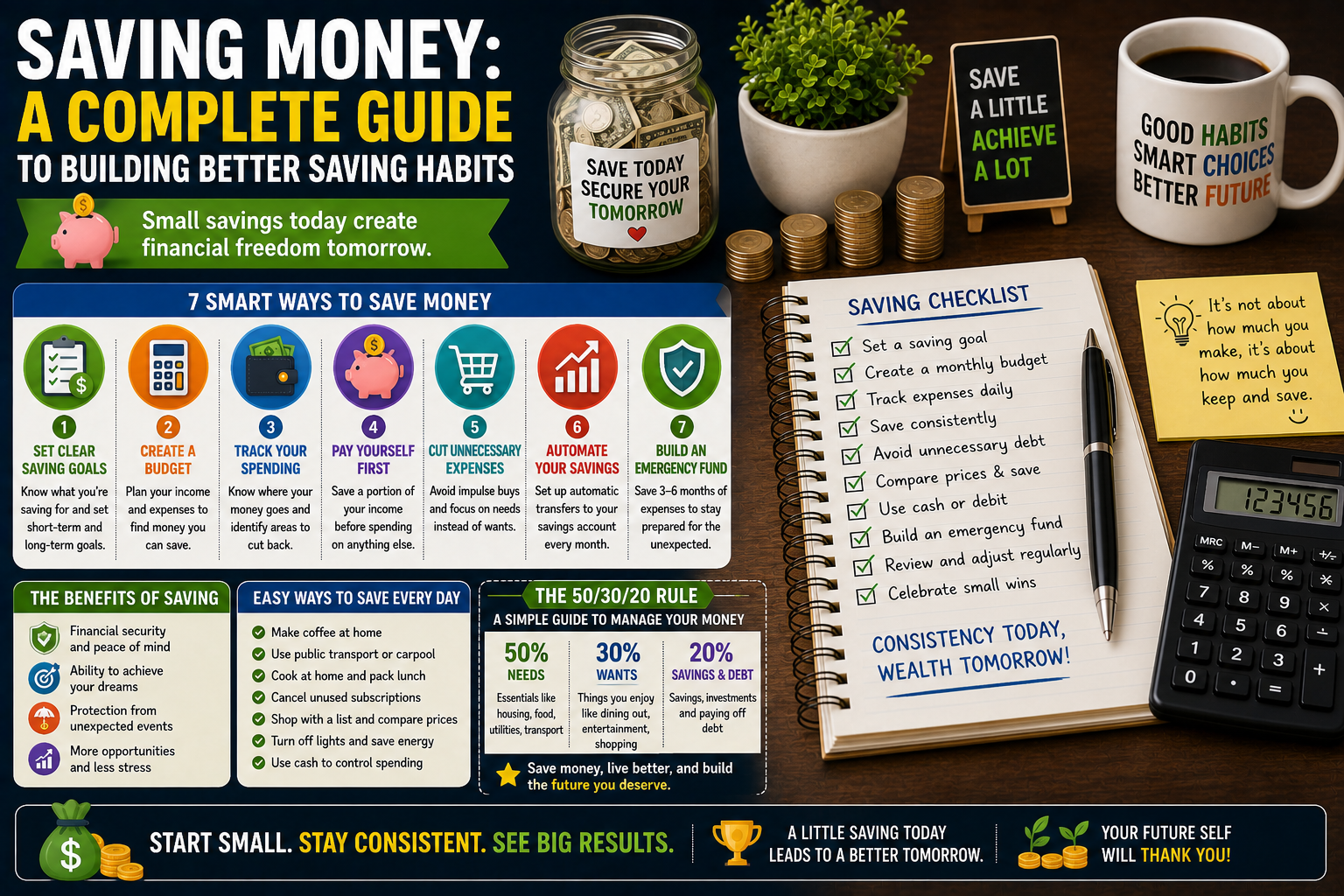
Introduction to Saving Money
Saving money is an important part of personal finance and can help you prepare for both planned and unexpected expenses. Whether you are saving for an emergency fund, education, a major purchase, or a long-term financial goal, developing consistent saving habits can make money management easier.
Saving does not always require a large income. The amount you can save depends on your personal circumstances, but even small and regular contributions can help you develop financial discipline. The key is to create a realistic plan that allows you to cover essential expenses while gradually setting money aside for the future.
A successful saving strategy is not about avoiding every purchase. It is about understanding your priorities, controlling unnecessary spending, and giving your money a clear purpose.
Why Is Saving Money Important?
Saving money provides financial flexibility. Unexpected expenses can happen at any time, and having savings available can reduce the need to rely on borrowing.
Savings can also help you achieve specific goals. Instead of depending entirely on credit or loans for a major expense, you may be able to plan ahead and build the required amount gradually.
Some common reasons people save include:
- Building an emergency fund
- Paying for education
- Making a large purchase
- Preparing for family expenses
- Managing irregular bills
- Reaching long-term financial goals
- Creating greater financial flexibility
The right savings priorities depend on your income, responsibilities, and personal goals.
Create a Savings Goal
One of the easiest ways to make saving more purposeful is to create a specific goal.
Instead of simply deciding to “save more money,” identify what you are saving for. For example, you might want to build an emergency fund or save for an important purchase.
Estimate how much money you need and determine when you may need it. Then calculate how much you can realistically set aside on a regular basis.
Breaking a large goal into smaller monthly or weekly targets can make it easier to monitor your progress.
Create a Realistic Budget
A budget can help you find money that can be directed toward savings.
Start by listing your income and essential expenses. Then include debt payments, regular spending, and other financial obligations. Once you understand your normal expenses, you can identify areas where spending may be reduced.
Your budget should be realistic. A plan that requires you to eliminate every optional expense may be difficult to maintain.
Instead, look for sustainable changes that allow you to save while still managing your normal needs.
Track Your Expenses
Expense tracking can reveal where your money is going. Small purchases may seem insignificant individually but can become a noticeable expense when repeated frequently.
For one month, record your spending and organize it into categories such as food, transportation, subscriptions, entertainment, shopping, and household expenses.
At the end of the month, review the results. Identify expenses that could be reduced without affecting important needs.
This process can help you make informed decisions instead of guessing where your money goes.
Save Before You Spend
One useful saving habit is to set aside money when you receive income rather than waiting until the end of the month.
If you wait to see what is left after spending, there may be little or nothing available to save.
Choose an amount that fits your financial circumstances and move it toward your savings goal early in your budgeting cycle.
The amount does not need to be large. Consistency can be more important than starting with an unrealistic target.
Automate Your Savings
Automatic transfers can make saving easier because they reduce the need to remember to move money manually.
If your bank or financial service provides an appropriate automatic transfer feature, you may be able to schedule a regular transfer from your main account to a savings account.
Automation can help turn saving into a routine.
However, make sure the amount and timing of the transfer are compatible with your income and upcoming expenses so that you do not create unnecessary payment problems.
Build an Emergency Fund
An emergency fund is savings reserved for unexpected and necessary expenses.
Examples may include urgent repairs, unexpected bills, or a temporary loss of income. Without emergency savings, an unexpected expense may force you to borrow money or delay another financial obligation.
Start with a small target if necessary and increase it over time. Some people eventually aim to save enough to cover several months of essential expenses, but the appropriate amount depends on individual circumstances.
Keep emergency savings separate from everyday spending when practical and make sure the money remains accessible when genuinely needed.
Reduce Unnecessary Expenses
One of the simplest ways to increase savings is to identify expenses that are not providing enough value.
Review recurring subscriptions, frequent restaurant or takeaway spending, unused memberships, impulse purchases, and other optional costs.
You do not need to eliminate every enjoyable expense. Instead, decide which purchases are important to you and which ones can be reduced.
For example, cancelling an unused subscription may allow you to redirect that money toward a savings goal every month.
Plan Your Grocery Spending
Food can represent a significant part of a household budget. Planning grocery purchases can help reduce unnecessary spending.
Create a shopping list before going to the store and check what you already have at home. Planning meals can also reduce food waste and unnecessary purchases.
Compare prices where practical and consider buying commonly used items in suitable quantities when doing so genuinely reduces the overall cost.
Avoid buying something simply because it is discounted. A discount only saves money if the purchase was useful and affordable in the first place.
Reduce Impulse Purchases
Impulse purchases can make saving difficult because they are often not included in a budget.
Before buying a non-essential item, give yourself some time to think about whether you actually need it.
For larger purchases, compare prices and consider alternatives before making a decision.
A simple waiting period can help separate genuine needs from temporary wants.
Review Subscriptions and Recurring Bills
Recurring payments can continue for months without receiving much attention.
Review your subscriptions, memberships, phone plans, internet services, and other regular bills. Identify services you no longer use or alternatives that may better fit your needs.
Do not cancel essential services simply to save money if doing so creates a larger problem. Instead, focus on expenses where a reduction can be made without affecting important needs.
Regularly reviewing recurring expenses can help keep your budget under control.
Reduce Household Expenses
Household costs can sometimes be reduced through simple changes.
Depending on your circumstances, you might reduce unnecessary electricity use, avoid wasting food, maintain equipment properly, or compare service providers when contracts or plans expire.
The goal is not to make life uncomfortable. Instead, focus on reducing waste and paying attention to expenses that can reasonably be controlled.
Small monthly savings can become more meaningful when maintained over time.
Use a Shopping List
A shopping list is a simple tool for controlling spending.
Before shopping, write down what you actually need. During the shopping trip, try to stay focused on the list while allowing room for genuinely necessary changes.
Online shopping can also benefit from this approach. Adding items to a list and waiting before purchasing can give you time to compare prices and decide whether the purchase is necessary.
This habit can reduce impulse buying and make spending more intentional.
Save Unexpected Income
Occasionally, you may receive money that was not included in your regular budget. This could include a gift, bonus, refund, or other legitimate unexpected income.
Instead of immediately spending all of it, consider dividing it among savings, important expenses, debt repayment, and reasonable personal spending.
The right choice depends on your financial circumstances. Even putting a portion toward a financial goal can help improve your overall position.
Avoid Lifestyle Inflation
Lifestyle inflation occurs when spending increases as income increases.
When people earn more, they may automatically upgrade their lifestyle and increase recurring expenses. While improving your lifestyle can be reasonable, consider saving at least part of additional income when possible.
For example, if your income increases, you might increase your savings contribution rather than allowing your entire additional income to become new spending.
This can help your financial progress keep pace with your income.
Save for Irregular Expenses
Some expenses are predictable but do not happen every month. Examples can include annual fees, school expenses, gifts, maintenance, insurance payments, or major household purchases.
Instead of waiting until the expense arrives, estimate the annual cost and divide it into smaller monthly amounts.
Set aside that amount regularly. When the expense eventually arrives, you will already have money available for it.
This approach can make irregular expenses easier to manage within your overall budget.
Make Saving a Family Habit
Saving money can become easier when everyone in a household understands the financial goals.
Families can discuss major spending priorities, savings goals, and ways to reduce unnecessary waste.
Parents or guardians can also teach children basic concepts such as needs versus wants, saving for goals, and making thoughtful purchasing decisions.
The exact approach should be appropriate for the child’s age and family circumstances.
Avoid Using Savings for Everyday Spending
Savings work best when they have a specific purpose.
If money intended for an emergency fund or long-term goal is regularly used for everyday purchases, it becomes difficult to make progress.
Creating separate categories or accounts for different goals can help you understand which money is available for normal spending and which money should remain reserved.
If you do need to use savings for a genuine emergency, focus on rebuilding the amount afterward.
Review Your Progress Regularly
Saving money is an ongoing process. Review your savings progress regularly and compare it with your original goals.
Ask yourself:
- How much have I saved?
- Am I meeting my monthly target?
- Which expenses can I reduce?
- Have my financial priorities changed?
- Do I need to adjust my savings target?
Your financial situation may change over time, so your savings plan should be flexible.
Common Saving Mistakes
One common mistake is setting an unrealistic savings target. If the target leaves you unable to cover essential expenses, the plan may not be sustainable.
Another mistake is focusing only on small purchases while ignoring large recurring expenses.
Some people also keep their savings goal too vague. Having a specific purpose can make it easier to stay motivated.
Finally, do not assume that every financial product advertised as a “saving opportunity” is automatically suitable. Understand fees, conditions, risks, and accessibility before committing money.
How to Build a Long-Term Saving Habit
Successful saving is usually based on consistency rather than dramatic changes.
Start with an amount that fits your circumstances. Track your progress and increase your savings gradually when your income or financial situation allows.
You can combine several habits, such as budgeting, expense tracking, automatic transfers, planned shopping, and regular financial reviews.
Over time, these habits can create a more organized approach to managing money.
Conclusion
Saving money is an important part of financial planning and can help you prepare for emergencies, planned expenses, and long-term goals. You do not need to start with a large amount. What matters is creating a realistic system that you can maintain.
Begin by setting a clear goal, creating a budget, tracking your expenses, reducing unnecessary spending, and saving consistently. As your circumstances change, review your strategy and make adjustments.
With patience and regular effort, saving can become a normal part of your financial routine and help you build greater financial flexibility over time.